
The cold line around your basement
Basement & Rim Joist Insulation in Indianapolis, IN
Seal and insulate the rim joist and foundation walls, ideally before the basement gets framed and finished.
- Free on-site estimates
- Written quotes that list material, thickness and R-value for each area
- Air leaks, moisture and old insulation checked before anything is covered
The Rim Joist: Small Area, Big Leak
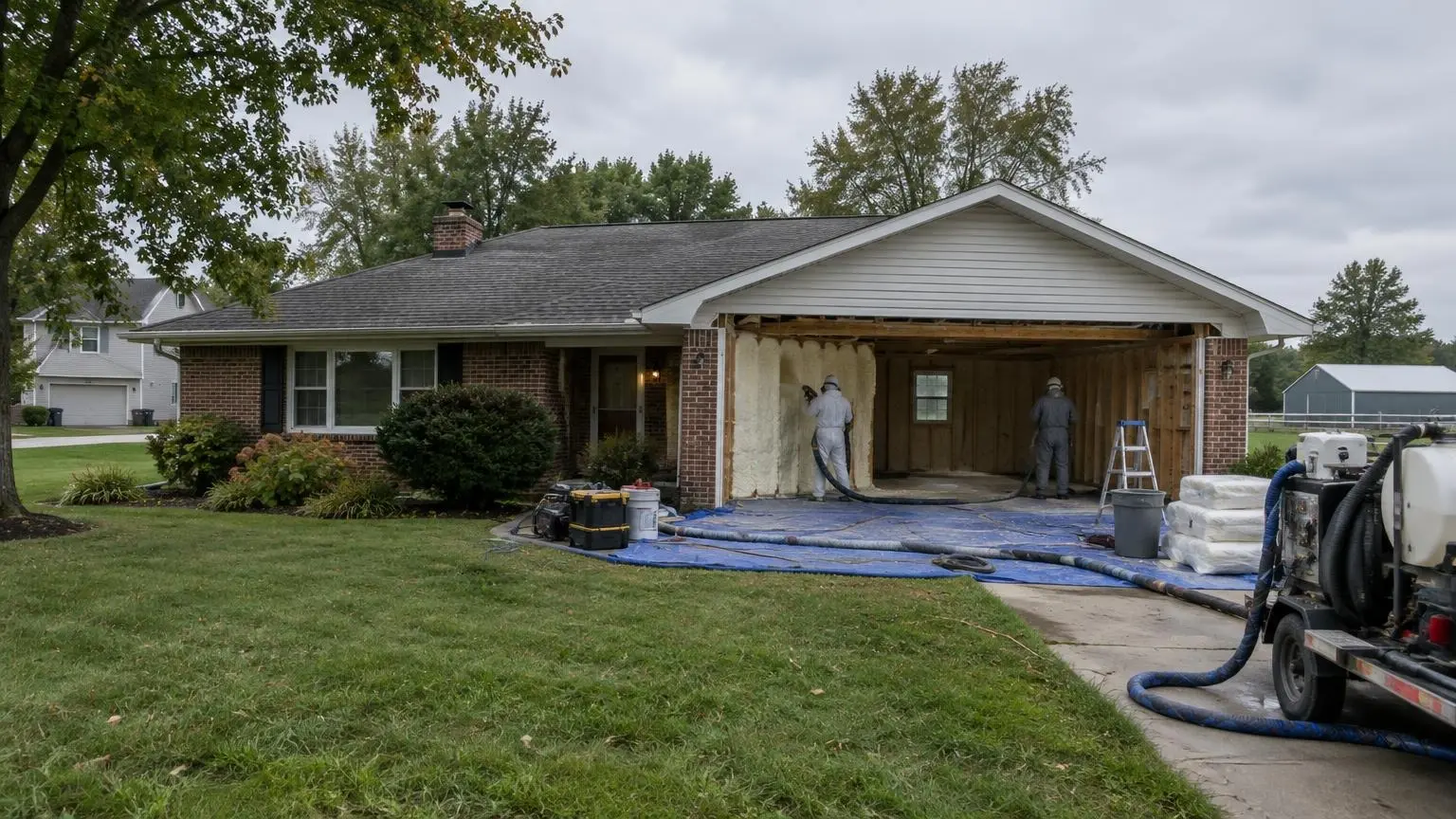
Basement and rim joist insulation in Indianapolis is often the fastest comfort fix in a house with a basement. The rim joist is the band of wood that sits on top of the foundation wall and holds the ends of the floor joists. It runs around the entire house, it is usually just one and a half inches of lumber, and the joint where it meets the sill plate and foundation leaks air. In many homes it has nothing on it, or a few loose pieces of fiberglass that do little to stop air. Cold air in winter and humid air in summer come straight into the basement along that line.
Why closed-cell foam fits the rim
The rim joist area is broken up into short bays between joists, with wiring and pipes running through. Batts never seal it well. Closed-cell foam sprayed 2 to 3 inches thick fills each bay, seals the sill gap and the rim in one pass, and gives R-5 to R-7 per inch according to HomeGuide. Because it slows vapor, it also keeps warm, damp indoor air from reaching the cold rim in winter, where it would condense and over time rot the wood. HomeGuide puts a typical rim joist foam job at $2,000 to $2,500.
Basement walls
Bare concrete or block walls lose a surprising amount of heat, especially the part above grade. The Insulation Institute's summary of the 2020 Indiana Residential Code lists R-13 cavity or R-10 continuous insulation for basement walls in Climate Zone 5, where OpenEI places Marion County. Foam board, or closed-cell spray foam on the concrete, reaches that while keeping warm interior air off the cold wall. That matters for anyone finishing a basement: fiberglass batts pressed against concrete behind plastic sheeting is a common way to end up with mold behind new drywall. We explain the moisture-safe options before you frame.
Before you finish the basement
The best time to insulate basement walls and the rim joist is before framing goes up. The surfaces are open, the work goes quickly, and you avoid cutting into new drywall later. Tell us your framing plan and we will time the work so the framers can follow right behind. If the walls show signs of water, like efflorescence, damp spots after rain or a musty smell, deal with that first. Insulation is not waterproofing.
Walkouts, split-levels and partial basements
Indianapolis has plenty of split-levels and homes that combine a partial basement with a crawl space. In those houses the rim joist continues from the basement into the crawl space, and the cold air path continues with it. We look at both and seal the whole line. Walkout basements have above-grade framed walls that get insulated like any exterior wall, plus the concrete sections.
Signs your rim joist needs attention
Cold floors along the outside walls of the first floor. A basement that stays chilly even with the furnace running. Spider webs and dust lines along the sill, which show where air moves. Frost or wet spots on the rim on a very cold morning. A draft you can feel with your hand along the top of the foundation. Any of these point to the rim.
What it does to the rest of the house
Air that comes in low pushes warm air out high. Sealing the rim and basement walls cuts that stack effect, which means fewer drafts upstairs too. Pair it with attic air sealing and the whole house gets tighter from bottom to top.
We look at the rim and walls, measure the linear feet and wall area, and send a written quote with the foam type and thickness. Get a free estimate
What We Insulate Below Grade
From the sill plate down to the slab.
Rim joist foam
Closed-cell foam in every bay, sealing the sill and band in one pass.
Foundation walls
Closed-cell foam or foam board on concrete or block to the Zone 5 target.
Pre-finish basements
Walls and rim done before framing, timed with your builder.
Walkout framed walls
Above-grade stud walls insulated and sealed like exterior walls.
Split-level transitions
Following the rim from the basement into the adjoining crawl space.
Published Basement & Rim Joist Insulation Costs
| Job | Range and source |
|---|---|
| Rim joists, spray foam | $2,000 to $2,500 (HomeGuide) |
| Closed-cell, installed | $3.00 to $5.00 per sq ft (HomeGuide) |
| Open-cell, installed | $1.50 to $3.50 per sq ft (HomeGuide) |
| About 1,000 sq ft of foam | $1,500 to $5,000 (HomeGuide) |
| Existing walls / new construction | $3.15 to $7.50 / $2.75 to $6.50 per sq ft (Fixr) |
| Typical spray foam minimum | $1,000 to $2,000+ (HomeGuide) |
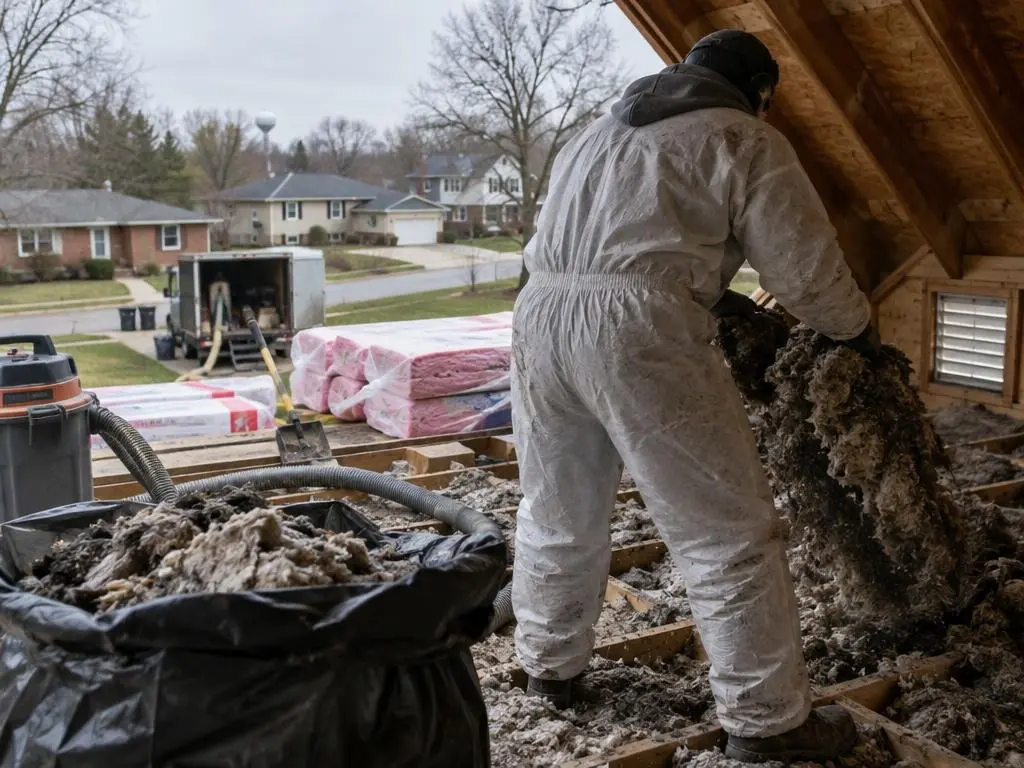
Ranges are nationwide (HomeGuide 2026, Fixr 2025). Linear feet of band joist, wall height, access and prep determine your number. After we measure, the written estimate is what you are charged.
How a Basement Job Runs
1. Look
Check the rim and walls for water, damage, wiring and pests; measure linear feet and wall area.
2. Quote
Foam type, thickness and price for rim and walls separately.
3. Prep
Cover the floor and mechanicals, mask wiring and pipes.
4. Spray
Foam the rim and walls to the planned thickness.
5. Hand off
Walk through the work and coordinate with your framer if you are finishing.

Why Choose Us for Basement & Rim Joist Insulation
Timed with your remodel
We work around your framing schedule.
Moisture checked first
Damp walls get flagged before anything is covered.
Linear feet on the quote
You see exactly how much rim is being sealed.
Basement & Rim Joist Insulation Questions
Is it worth insulating just the rim joist?
Often, yes. It is a small area but a big air leak, and closed-cell foam seals and insulates it in one pass. HomeGuide lists a typical rim joist job at $2,000 to $2,500.
What R-value do Indiana basement walls need?
The 2020 Indiana Residential Code, as summarized by the Insulation Institute, lists R-13 cavity or R-10 continuous for basement walls in Climate Zone 5. Check with your building department for permit requirements.
Can I put fiberglass batts on basement walls?
Batts against concrete behind plastic often trap moisture. Foam board or closed-cell foam against the concrete is the safer approach, with framing in front.
Should I insulate before or after framing the basement?
Before. The walls and rim are open, the work is faster, and you avoid tearing into new drywall later.
Basement & Rim Joist Insulation Service Areas
- Spray Foam Insulation in Indianapolis, IN
- Spray Foam Insulation in Carmel, IN
- Spray Foam Insulation in Fishers, IN
- Spray Foam Insulation in Noblesville, IN
- Spray Foam Insulation in Westfield, IN
- Spray Foam Insulation in Zionsville, IN
- Spray Foam Insulation in Whitestown, IN
- Spray Foam Insulation in Lawrence, IN
- Spray Foam Insulation in Speedway, IN
- Spray Foam Insulation in Beech Grove, IN
- Spray Foam Insulation in Greenwood, IN
- Spray Foam Insulation in Franklin, IN
- Spray Foam Insulation in Greenfield, IN
- Spray Foam Insulation in McCordsville, IN
- Spray Foam Insulation in Brownsburg, IN
- Spray Foam Insulation in Avon, IN
- Spray Foam Insulation in Plainfield, IN
- Spray Foam Insulation in Danville, IN
- Spray Foam Insulation in Mooresville, IN
- Spray Foam Insulation in Martinsville, IN
Get a Basement & Rim Joist Insulation Estimate
Finishing a basement? Call before the framers come and we will get the rim and walls done first.