
Drier crawl spaces, warmer floors
Crawl Space Insulation & Encapsulation in Indianapolis, IN
Humid summers and wet soils make vented crawl spaces damp. We close them up, seal the ground and insulate the walls.
- Free on-site estimates
- Written quotes that list material, thickness and R-value for each area
- Air leaks, moisture and old insulation checked before anything is covered
Why So Many Indianapolis Crawl Spaces Run Damp
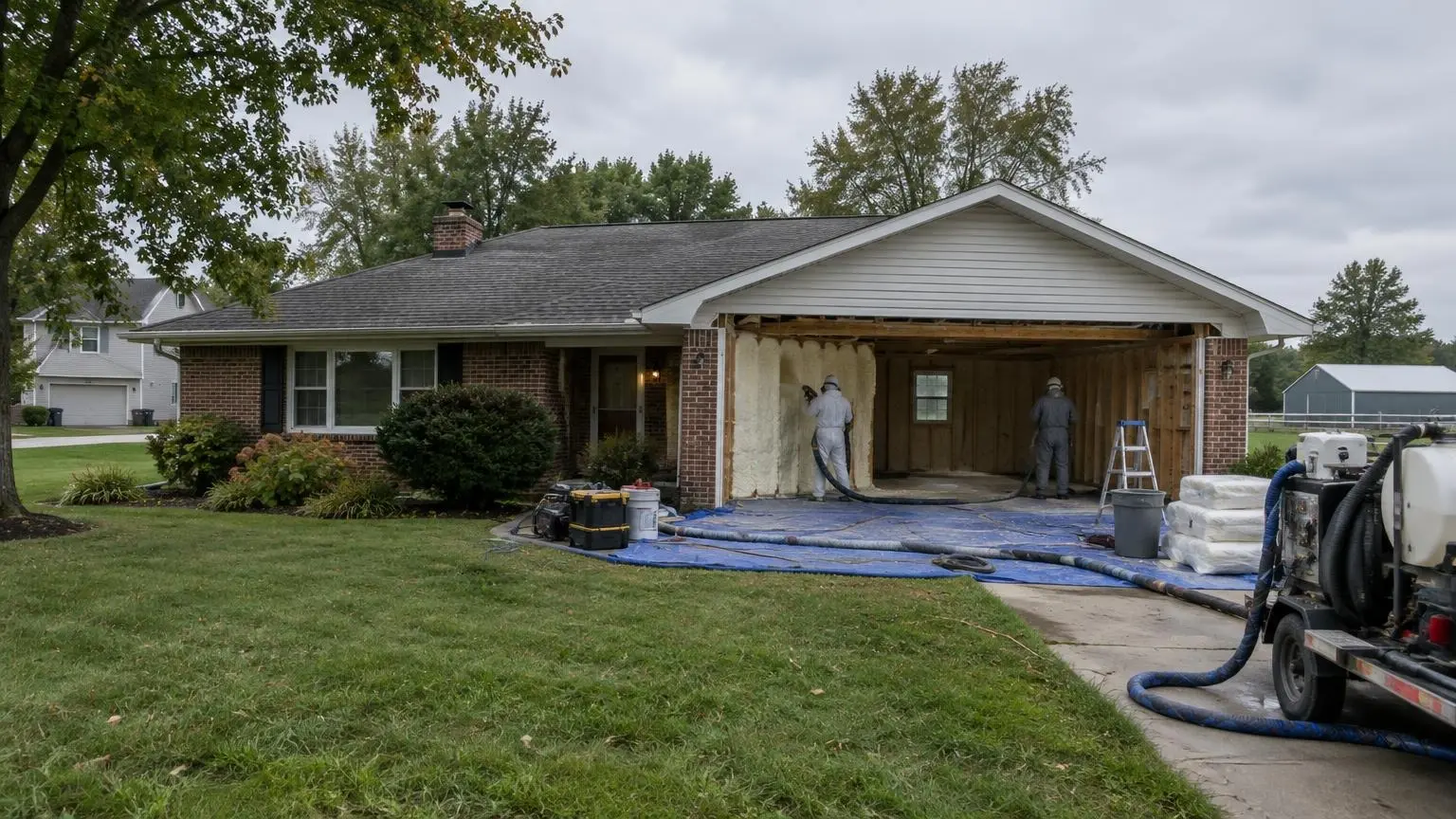
Crawl space insulation and encapsulation in Indianapolis usually starts with a moisture problem, not an insulation one. Many of the ranches and split-levels built here after World War II sit over vented crawl spaces with bare dirt floors. Wikipedia lists the city's average relative humidity at 72.3%, and the summers are hot. When that damp outdoor air flows in through the vents, it meets cool ductwork, pipes and floor framing and condenses. Add ground moisture rising from the dirt, and you get musty smells, sagging fiberglass batts, rusty duct straps and cold floors in winter.
The soil underneath
Much of central Indiana is glacial till plain. The USDA's description of the Crosby soil series, common on these till plains, calls it somewhat poorly drained, with a perched seasonal water table 0.5 to 2 feet below the surface in winter and spring. That water does not need to pool on the crawl space floor to cause trouble; it keeps the soil damp, and damp soil gives off vapor into the space all year. A sealed ground cover stops that vapor at the source. If water actually stands in the crawl space after rain, grading, gutters or a drain and sump come first. We look for that on every visit and tell you if you need it before we quote insulation.
What encapsulation means
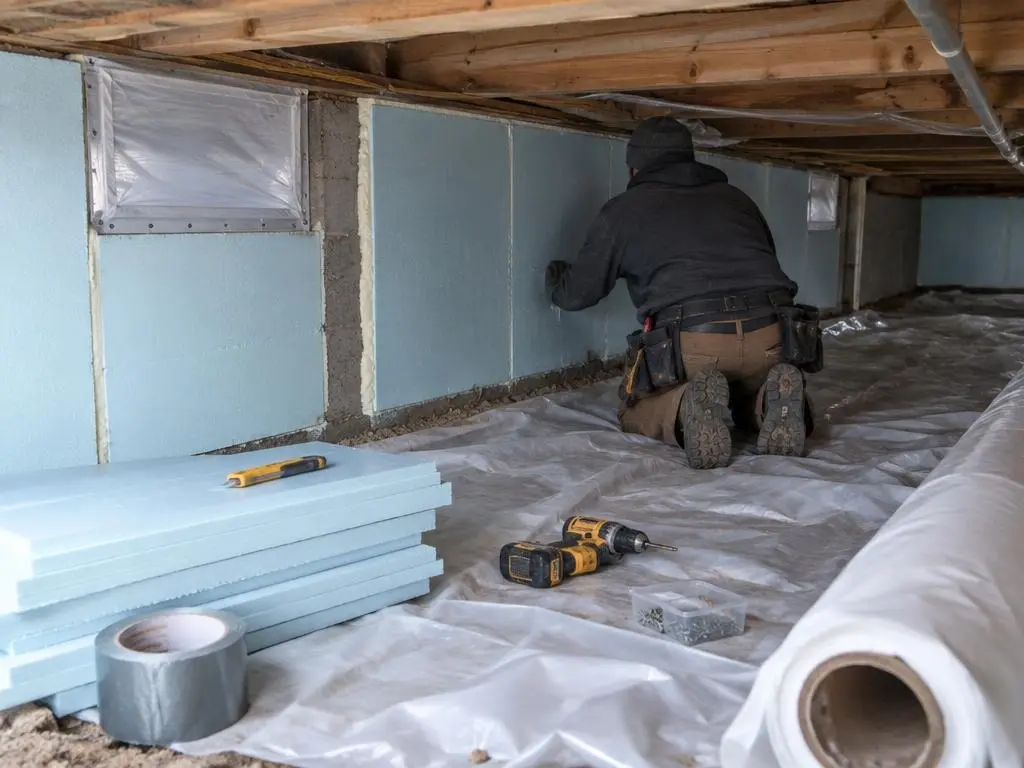
An encapsulated crawl space is closed off from the outside. We seal the foundation vents, lay a heavy vapor barrier over the ground and up the walls, seal its seams and edges, and insulate the walls and rim joist instead of the floor above. The space then sits close to the temperature and humidity of the house. Some homes also need a dehumidifier or a small supply of conditioned air to keep humidity in check; we explain when that applies.
Insulating walls instead of the floor
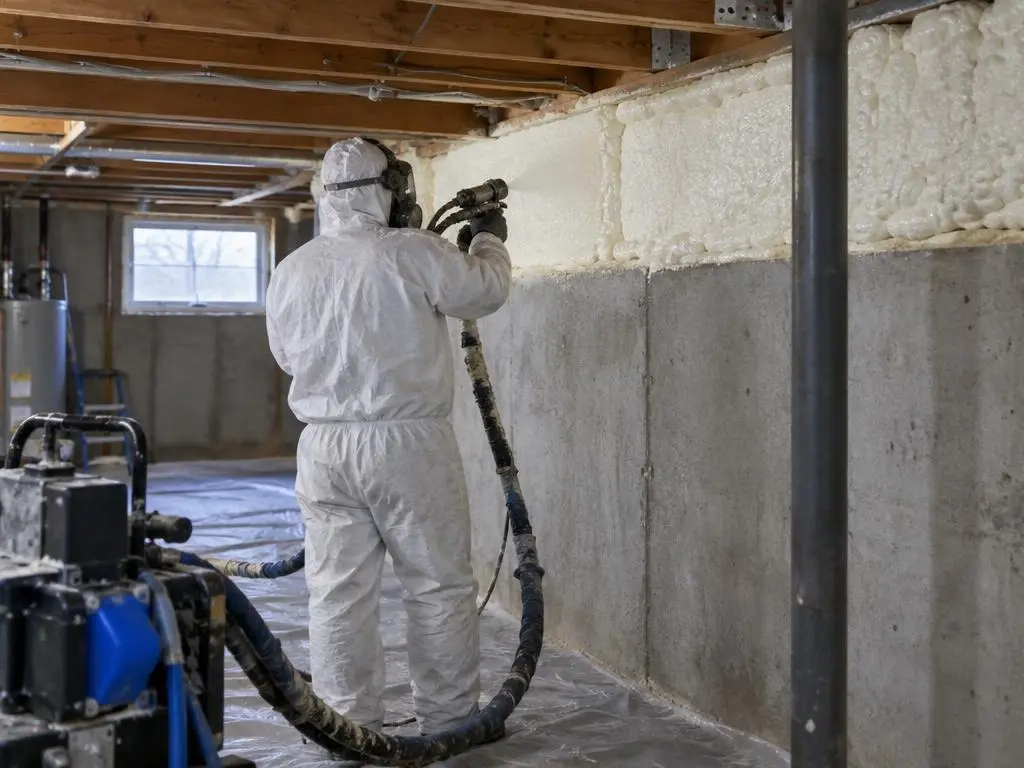
Most older crawl spaces have fiberglass batts stapled between the floor joists, or nothing at all. Those batts often fall down, soak up moisture and leave gaps. Once the crawl space is sealed, it makes more sense to insulate the foundation walls and rim joist. The Insulation Institute's summary of the 2020 Indiana Residential Code lists R-13 cavity or R-10 continuous insulation for crawl space walls in Climate Zone 5, and OpenEI lists Marion County in Zone 5A. Closed-cell foam on the walls and rim reaches that in a couple of inches, seals air leaks at the sill and does not absorb water. Where a crawl space must stay vented, we insulate and air seal the floor above instead and protect the ducts and pipes.
Ducts and pipes in the crawl space
Many Indianapolis homes have their furnace ducts running through the crawl space. In a vented space, those ducts lose heat in winter and sweat in summer. In a sealed, insulated crawl space they sit inside the conditioned envelope, which cuts both problems. Water lines are less likely to freeze when the space stays warmer during a cold snap; the city's record low is -27F, and the January mean low is 20.9F.
Old insulation and debris
Wet or fallen batts, old plastic, construction scraps and evidence of rodents come out before new work goes in. We bag and remove old insulation and note anything that needs attention, like damp sill plates or damaged joists, so you can decide how to handle it.
Radon and combustion appliances
If your crawl space holds a gas furnace or water heater, closing the space changes how that equipment gets combustion air. We check for that, and we tell you if the plan needs an HVAC contractor's input. If you are planning radon mitigation, a sealed ground cover can work with a sub-membrane system; let us know so we can leave room for it.
We start every crawl space job with a look and photos, and the quote lists vapor barrier, vent sealing, wall and rim insulation and any removal as separate lines. Get a free estimate
What a Crawl Space Job Can Include
Pieces you can do together or one at a time.
Vapor barrier
Heavy liner over the ground and up the walls, with seams and edges sealed.
Vent sealing
Closing foundation vents so humid summer air stays out.
Closed-cell wall foam
Foam on foundation walls to the Zone 5 target, sealing the sill at the same time.
Rim joist sealing
Foam along the band where the house framing meets the foundation.
Floor insulation
For crawl spaces that must stay vented: sealed and insulated floor above.
Old insulation removal
Pulling wet, fallen or rodent-damaged batts before new work.
Published Crawl Space Insulation & Encapsulation Costs
| Job | Range and source |
|---|---|
| Crawl space encapsulation | $3 to $10 per sq ft, $3,000 to $15,000 (HomeGuide) |
| Crawl space vapor barrier | $1,200 to $4,000 (HomeGuide) |
| Crawl space vent sealing | $150 to $450 (HomeGuide) |
| Closed-cell on crawl space walls | $2 to $5 per sq ft (HomeGuide) |
| Crawl space, spray foam | $2,000 to $4,000 (HomeGuide); $1,000 to $5,900 (Fixr) |
| Rim joists, spray foam | $2,000 to $2,500 (HomeGuide) |
National numbers from HomeGuide's 2026 encapsulation and spray foam guides and from Fixr (2025). Square footage, wall height, how hard the space is to reach, drainage fixes and clean-out decide your cost. The written estimate from our visit is the price.
How a Crawl Space Job Runs
1. Inspect
Check for water, grading issues, damp wood, ducts, appliances and old insulation; take photos.
2. Quote
Each piece priced separately, with any drainage work flagged first.
3. Clean out
Remove old batts, debris and plastic.
4. Seal and line
Seal vents and the rim, lay and seal the vapor barrier.
5. Insulate
Foam the walls and rim joist to the quoted thickness, then walk you through it.
Why Choose Us for Crawl Space Insulation & Encapsulation
Water first
We tell you if drainage needs fixing before we sell you insulation.
Photos before and after
You see a space you probably never crawl into.
Line-item quote
Barrier, vents, foam and removal priced separately.
Crawl Space Insulation & Encapsulation Questions
Is crawl space encapsulation worth it in Indianapolis?
For many homes with a damp or musty crawl space, yes. Humid summers and poorly drained soils push moisture into vented crawl spaces. Sealing the vents and ground and insulating the walls usually keeps the space drier and the floor warmer.
Should crawl space insulation go on the walls or the floor?
If the crawl space is sealed, on the walls and rim joist. If it must stay vented, insulate and air seal the floor above instead. We explain which fits your house.
Do I need a dehumidifier after encapsulation?
Some homes do and some do not. It depends on how tight the space ends up and how humid it runs. We check after the work and tell you if it is needed.
What if water comes into my crawl space after storms?
That needs fixing first, with grading, gutters or a drain and sump. Insulation and a liner do not fix drainage. We flag it and price insulation work for after it is solved.
Crawl Space Insulation & Encapsulation Service Areas
- Spray Foam Insulation in Indianapolis, IN
- Spray Foam Insulation in Carmel, IN
- Spray Foam Insulation in Fishers, IN
- Spray Foam Insulation in Noblesville, IN
- Spray Foam Insulation in Westfield, IN
- Spray Foam Insulation in Zionsville, IN
- Spray Foam Insulation in Whitestown, IN
- Spray Foam Insulation in Lawrence, IN
- Spray Foam Insulation in Speedway, IN
- Spray Foam Insulation in Beech Grove, IN
- Spray Foam Insulation in Greenwood, IN
- Spray Foam Insulation in Franklin, IN
- Spray Foam Insulation in Greenfield, IN
- Spray Foam Insulation in McCordsville, IN
- Spray Foam Insulation in Brownsburg, IN
- Spray Foam Insulation in Avon, IN
- Spray Foam Insulation in Plainfield, IN
- Spray Foam Insulation in Danville, IN
- Spray Foam Insulation in Mooresville, IN
- Spray Foam Insulation in Martinsville, IN
Get a Crawl Space Insulation & Encapsulation Estimate
Musty smell or cold floors? We will crawl in, take photos and send a written plan.